

You’ve probably seen the Sankofa symbol before, even if you didn’t know its name.

Maybe it was on a T shirt, a necklace, a tattoo, or in a photo from a fashion event or cultural ceremony. The symbol usually stands out. A bird looking backward. Sometimes a heart shaped design. Always something that feels intentional.
And naturally, the question comes up.
What does Sankofa actually mean
This guide is here to give you the full picture. Not just a quick definition, but the meaning, origin, symbolism, and modern use of Sankofa, so when you leave this page, you feel confident saying:
I understand what Sankofa is and how it’s used.
What Does Sankofa Mean
Sankofa means go back and get it.
That’s the simplest way to say it.
It teaches that you can’t build a strong future if you ignore the past. Sometimes you need to return, recover what was lost, and carry that wisdom forward.
Think of it like this.
If you’re building a house and you keep skipping the foundation, the house might look good for a while, but it won’t last. Sankofa is the foundation check.
The Core Lesson Behind Sankofa
Sankofa is about:
- Learning from past mistakes
- Recovering forgotten knowledge
- Honoring ancestors and memory
- Using history as guidance, not baggage
This is why the symbol still feels relevant today. Everyone reaches a moment where looking back becomes necessary to grow.
Where Sankofa Comes From
Sankofa comes from the Akan people of Ghana, and it is part of the Adinkra symbols tradition.
Adinkra symbols were created to communicate ideas visually. Long before modern logos or slogans, these symbols were used to pass down values, beliefs, and life lessons.
They appeared on cloth, pottery, architecture, and ceremonial items.
Sankofa was one of the symbols used to teach wisdom, reflection, and responsibility across generations.
Sankofa Within the Adinkra Symbol System
Adinkra symbols each represent a specific concept.
Some focus on humility and strength.
Others on leadership, faith, supremacy of God or unity in diversity.
Sankofa stands out because its message applies to almost every part of life.
It reminds people to pause, reflect, and learn before moving forward.
That’s why it remains one of the most recognized Adinkra symbols worldwide.
The Sankofa Symbol Explained
There are two main ways Sankofa is represented today. Understanding the difference helps avoid confusion.


Pronunciation:
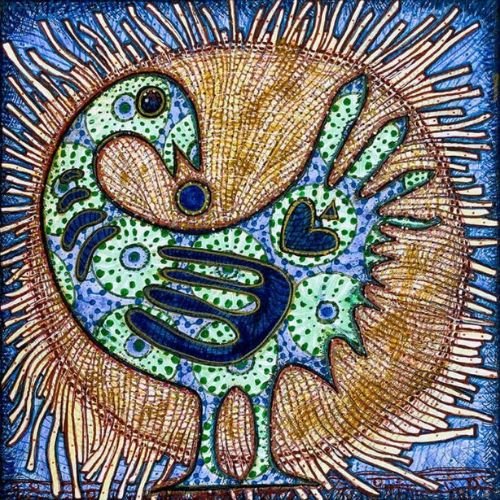
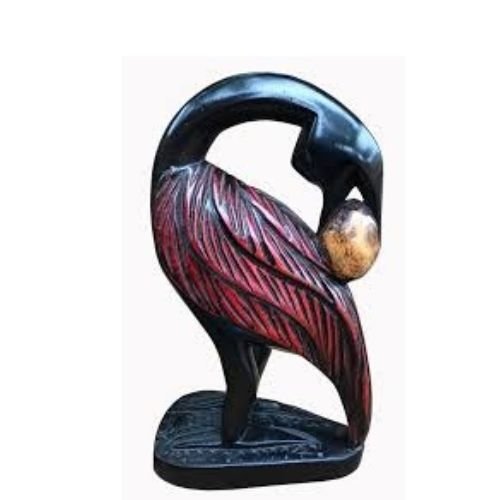
The Sankofa Bird
This is the most traditional and widely recognized form.
It shows a bird looking backward while holding an egg in its beak.
Each element matters:
- The bird looking back represents reflection and returning
- The backward motion shows learning from what came before
- The egg represents the future, new life, and responsibility
Together, the image sends one clear message.
To protect the future, you must understand the past.
The Sankofa Heart
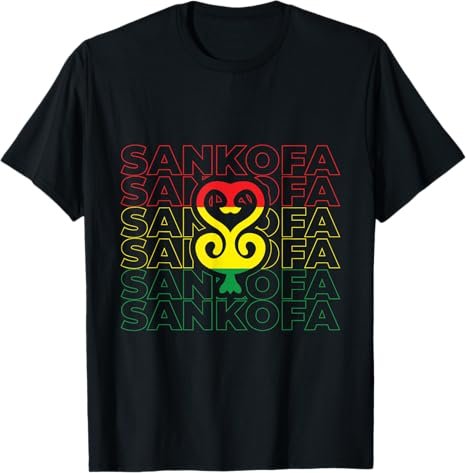
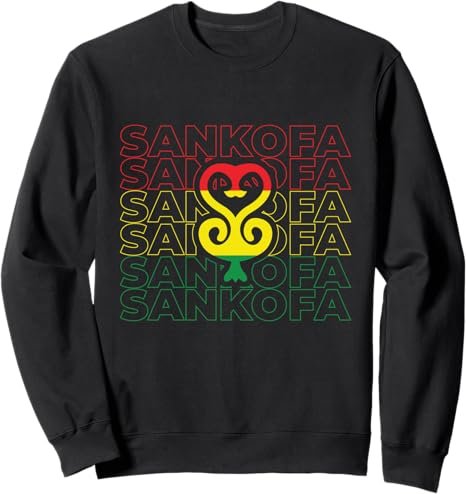
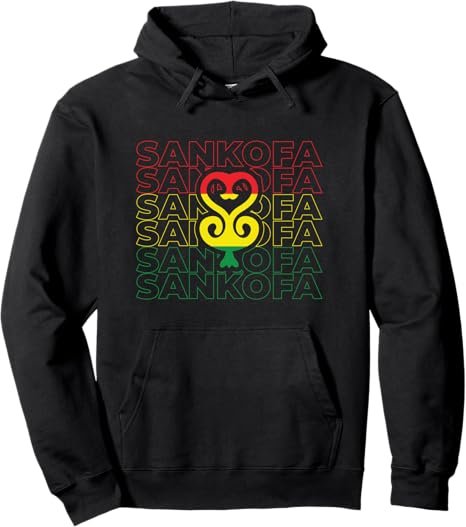
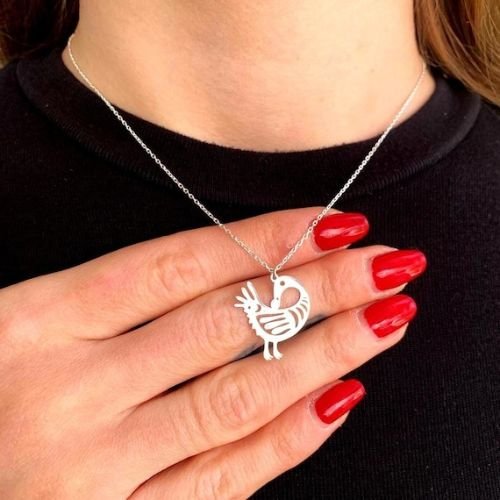
The second form is a stylized heart shape, often used in jewelry and modern design.
This version leans more into:
- Emotional memory
- Love for ancestry
- Identity and belonging
- Healing and reconnection
While it’s less traditional than the bird, it carries the same underlying idea of remembering and reclaiming what matters.
Sankofa Bird vs Sankofa Heart
Here’s a simple comparison to make the difference clear.
| Form | Visual | Main Focus | Common Use |
|---|---|---|---|
| Sankofa bird | Bird looking backward with an egg | Wisdom, learning, responsibility | Cultural education, murals, formal symbolism |
| Sankofa heart | Heart shaped design | Identity, connection, healing | Jewelry, fashion, modern graphics |
Both are Sankofa.
The bird is the original form rooted in proverb and tradition.
Sankofa in African Philosophy
In African philosophy, Sankofa is not just advice.
It’s a responsibility.
The idea is that wisdom does not start with you. It’s inherited, tested, and refined over generations.
So before you lead, decide, or build something new, you are expected to:
- Learn what came before
- Understand why certain paths worked or failed
- Respect the knowledge passed down
- Avoid repeating avoidable mistakes
Sankofa reinforces a core belief found across many African cultures:
You are part of a long story, not the beginning of it.
This is why elders, oral history, proverbs, and symbols matter so much. Sankofa visually captures that entire worldview in one image.
Sankofa and the African Diaspora
Sankofa holds a special place in the African diaspora because the diaspora experience often includes broken or interrupted history.
For many people, especially descendants of enslaved Africans, history was:
- Erased
- Distorted
- Renamed
- Or never passed down at all
In that context, Sankofa becomes more than philosophy.
It becomes a tool.
A tool for:
- Reclaiming identity
- Reconnecting with ancestry
- Seeking knowledge that was denied
- Filling in historical gaps
Sankofa gives language to a feeling many people already have.
The feeling that something important was lost, and it’s worth going back to retrieve it.
Why Sankofa Resonates So Strongly Outside Africa
Even for people who don’t know the full history at first, Sankofa resonates because it speaks to universal experiences.
Everyone has:
- Family stories they never heard
- Cultural roots they want to understand
- Lessons they learned the hard way
- Moments they wish they could revisit with new knowledge
Sankofa validates that instinct to look back, not with regret, but with intention.
That’s why the symbol travels so well across borders.
Sankofa in African American Culture
In African American culture, Sankofa is widely embraced as a symbol of:
- Cultural reclamation
- Pride in African heritage
- Remembering ancestors
- Self definition beyond imposed narratives
It often appears in spaces where history, identity, and education intersect.
You’ll see Sankofa in:
- Schools and educational programs
- Community centers
- Murals and public art
- Graduation stoles and ceremonies
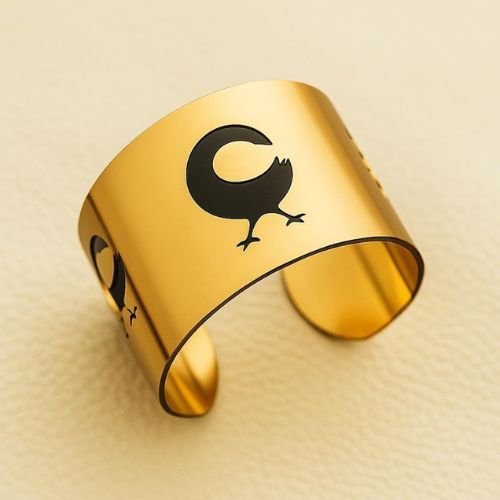
- Jewelry and clothing meant to say something meaningful

In this context, Sankofa often says:
I am learning what wasn’t taught to me
I am honoring where I come from
I am carrying that knowledge forward
Sankofa as a Symbol of Healing and Growth
For many people, Sankofa isn’t just about history.
It’s personal.
It represents:
- Healing from generational trauma
- Understanding family patterns
- Breaking cycles
- Growing with awareness
Looking back becomes part of moving forward.
This is why Sankofa often shows up during moments of transition, like:
- Graduations
- New careers
- Parenthood
- Personal transformation
- Cultural reconnection
It’s a reminder that growth is stronger when it’s informed.
Sankofa in Modern Culture
Today, Sankofa has moved far beyond textbooks and museums.
It lives in:
- Fashion
- Art
- Music
- Tattoos
- Design
- Storytelling
Modern culture is increasingly visual, and Sankofa works well visually because it already carries meaning without needing words.
When someone sees it and asks what it means, a conversation starts.
And that conversation is part of the symbol’s power.
Why Sankofa Works So Well in Fashion
Fashion has always been about more than clothes.
It’s about signaling:
- Who you are
- Where you come from
- What you value
Sankofa fits naturally into fashion because it already communicates:
- Reflection
- Identity
- Memory
- Intention
Wearing Sankofa turns clothing into a statement, not just an outfit.
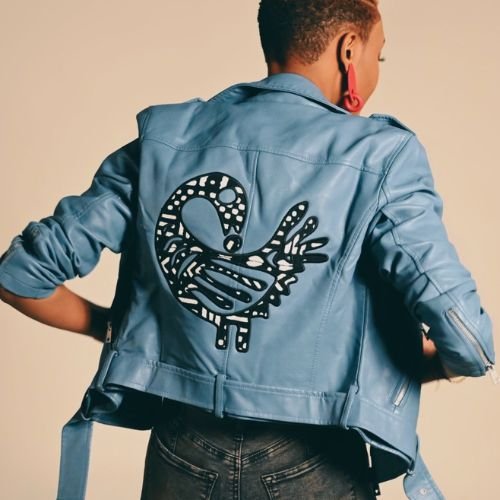
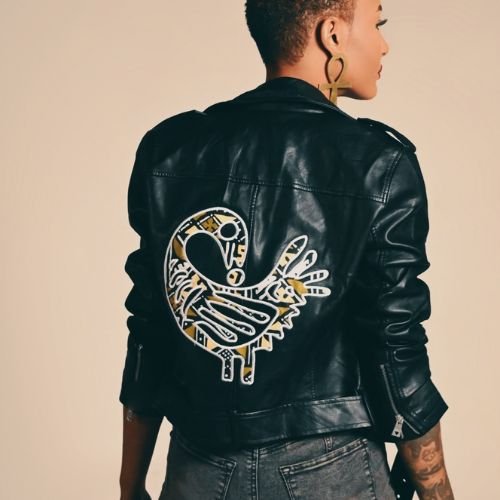
Sankofa as Cultural Storytelling Through Clothing
When Sankofa appears on jackets, coats, or ceremonial wear, it’s usually intentional.
It often signals:
- Respect for heritage
- Awareness of history
- Connection to ancestry
- Responsibility to the future
This is especially true when Sankofa appears in high visibility spaces, like major fashion events or public ceremonies.
In those moments, the symbol is doing exactly what it was always meant to do.
Teach a lesson.
Sankofa in High Fashion and Public Moments
One reason Sankofa feels more visible today is because it’s showing up in high profile places.
Fashion has become a stage for cultural storytelling, and Sankofa fits that role perfectly.
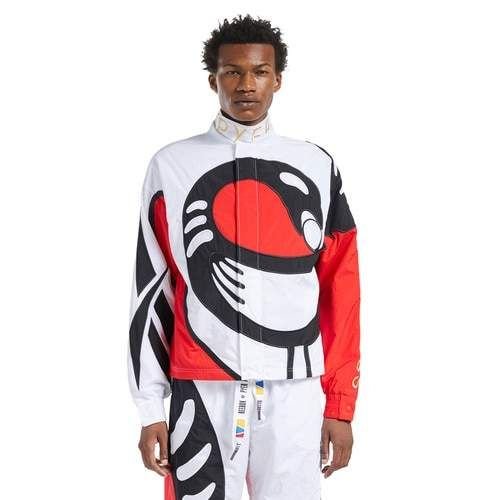
A major moment for Sankofa in global culture came when Dapper Dan wore a look featuring the Sankofa bird at the Met Gala.
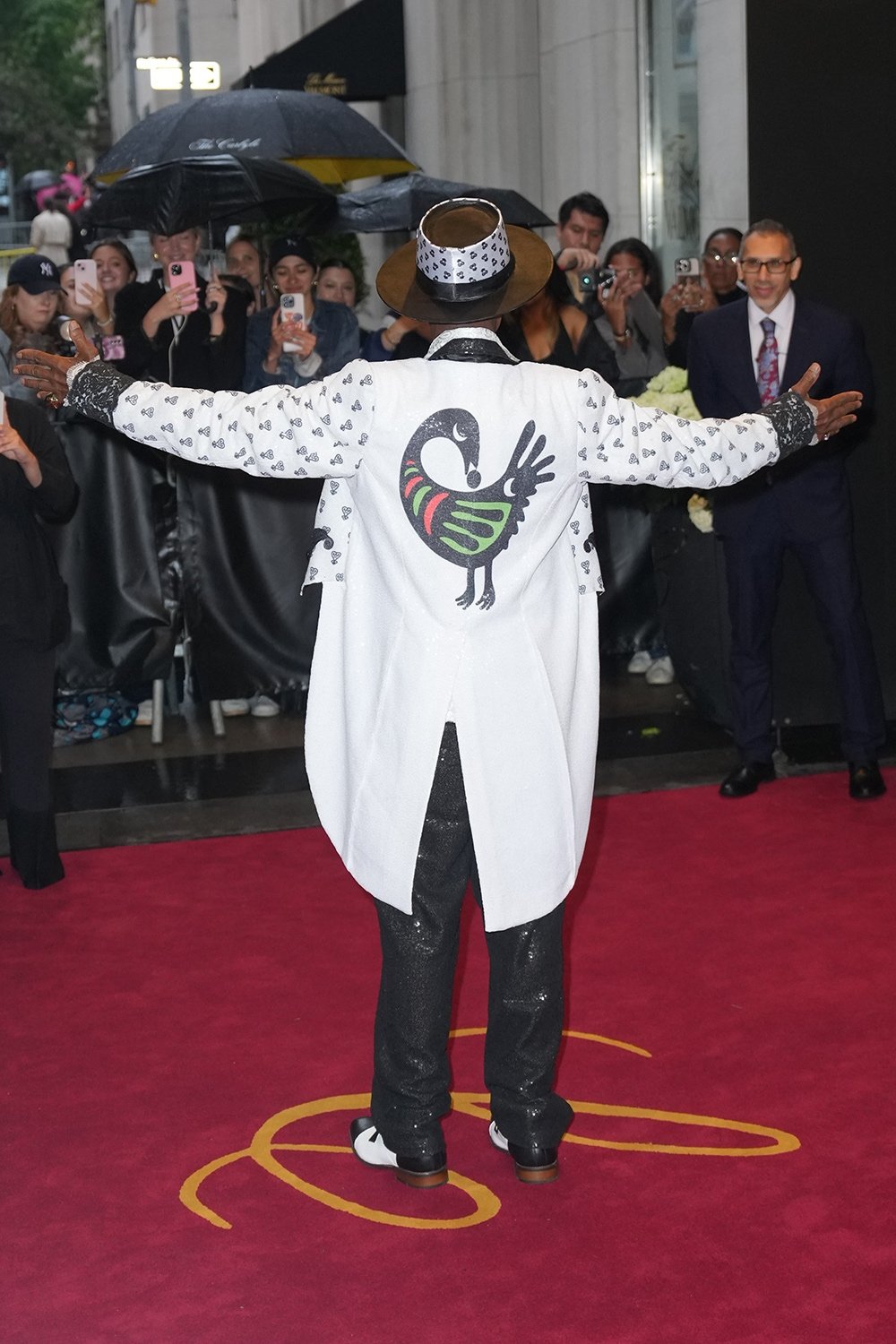
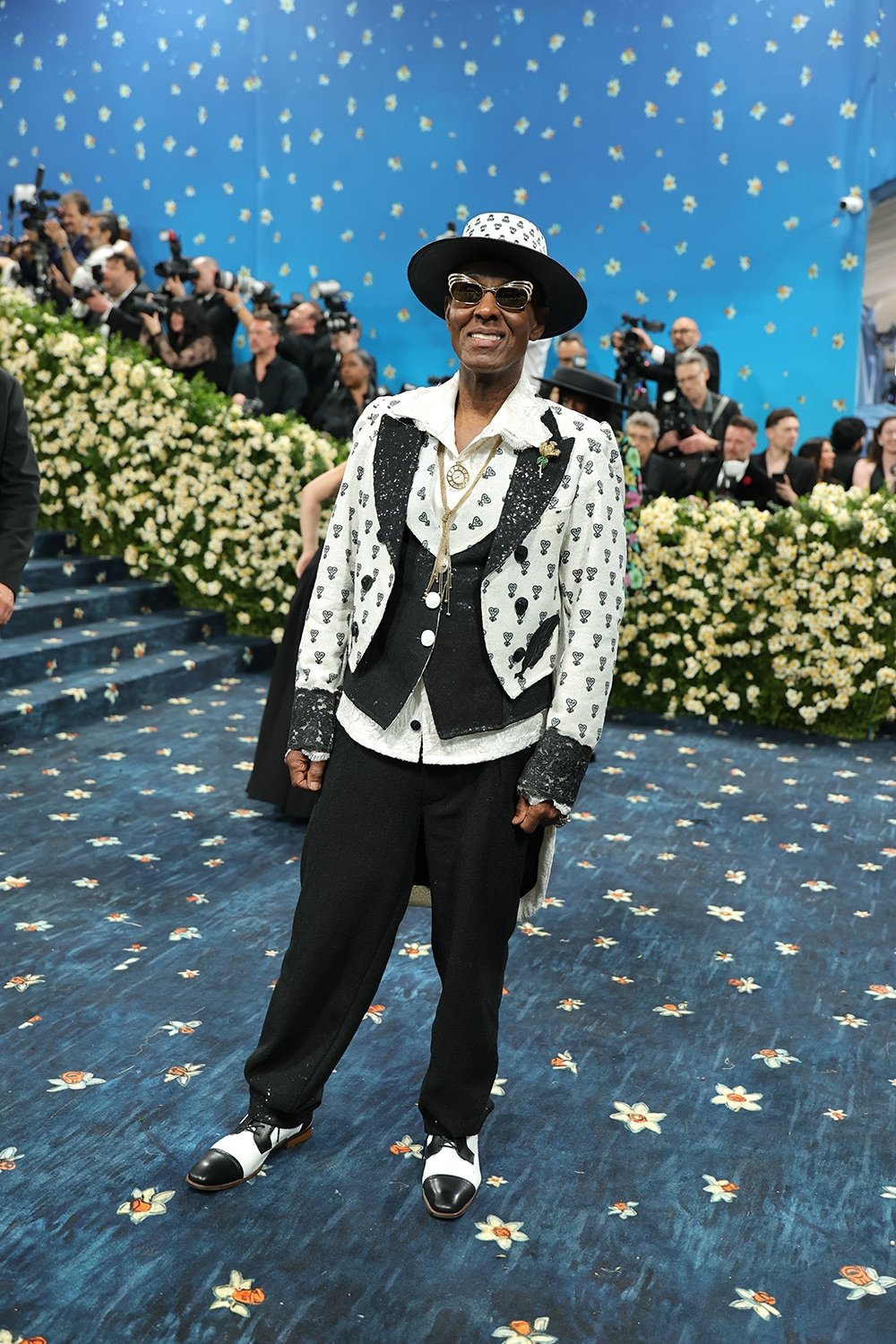
This wasn’t random.
Dapper Dan is known for blending Black history, Harlem culture, and luxury fashion.
Sankofa in Leadership and Ceremonial Dress
Sankofa isn’t only used for personal expression or fashion statements.
It’s also used in leadership and ceremonial clothing, especially in Ghana, where Adinkra symbols are deeply understood.
Former Ghanaian president John Dramani Mahama has worn Adinkra symbols, including Sankofa, in ceremonial contexts.
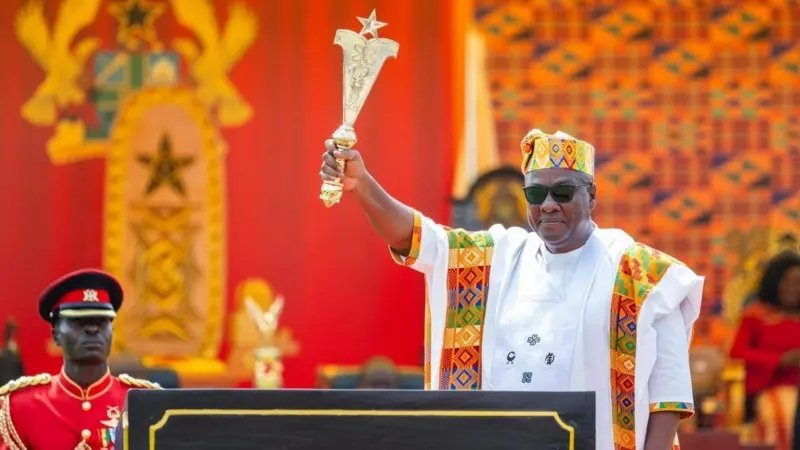
In this setting, Sankofa communicates something different.
It signals:
- Leadership rooted in history
- Awareness of past governance
- Responsibility to future generations
- Wisdom before action
Why Leaders Use Symbols Like Sankofa
In many African traditions, leaders are expected to show wisdom, not just power.
Wearing Sankofa in a ceremonial context says:
I am aware of the past
I have learned from it
I will not ignore it
It’s a reminder to both the leader and the public that progress should be informed, not reckless.
What It Means When Someone Wears Sankofa
Whether it’s in fashion, jewelry, or ceremony, wearing Sankofa almost always communicates intention.
Common messages include:
- I honor my ancestors
- I value history and memory
- I learn from my past
- I take responsibility for what comes next
- I am connected to something bigger than myself
Sankofa Tattoos: Meaning and Intention
Sankofa is a popular choice for tattoos, and usually for serious reasons.
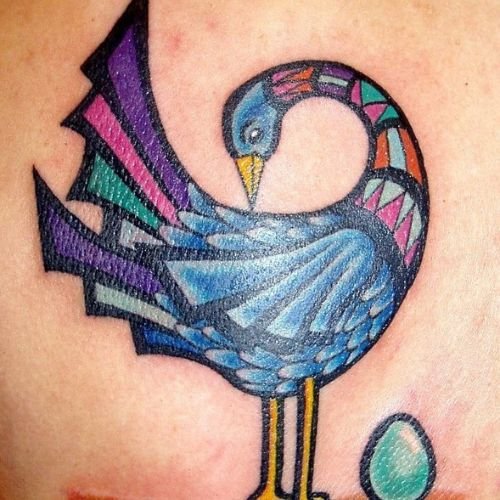
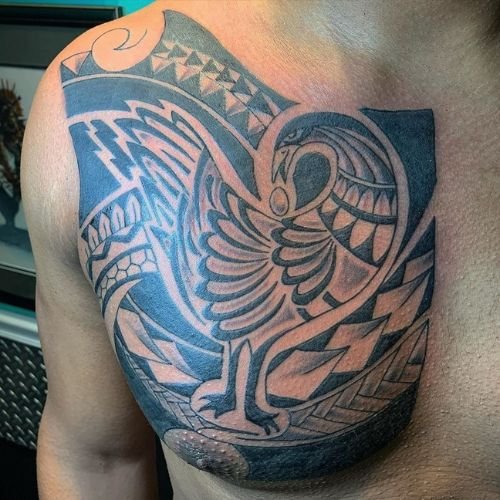
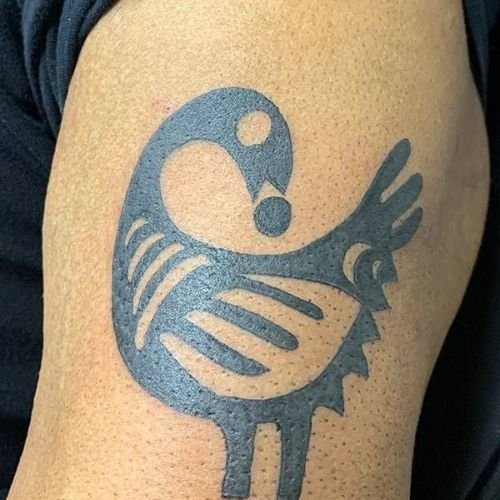
Why people choose Sankofa tattoos
People often choose Sankofa to mark:
- Personal transformation
- Healing journeys
- Cultural reconnection
- Honoring ancestors
- Lessons learned the hard way
A Sankofa tattoo is less about style and more about meaning.
Is It Okay for Anyone to Wear Sankofa
This is one of the most common and most important questions people ask.
And it’s a good one.
Sankofa is not about exclusion. It’s about understanding and respect.
The short answer is yes, anyone can wear or use Sankofa if they understand what it means and where it comes from.
What Respectful Use of Sankofa Looks Like
Using Sankofa respectfully usually means a few simple things.
- You know it comes from Akan culture in Ghana
- You understand the core meaning, go back and get it
- You don’t twist the symbol into something unrelated
- You’re not using it just because it looks exotic or trendy
- You’re open to explaining it if someone asks
What to Avoid When Using Sankofa
Here are some common mistakes that cause problems.
- Treating Sankofa as a generic “African pattern”
- Mixing it randomly with unrelated symbols
- Changing the design so much it loses meaning
- Selling or using it with no explanation or context
- Using it as a costume instead of a message
Sankofa loses its power when the story is stripped away.
How Sankofa Is Used Today
Sankofa shows up in many areas of modern life. Some uses feel natural and meaningful. Others depend on how thoughtfully it’s applied.
Below are the most common and widely accepted uses.
Practical Guide: Using Sankofa the Right Way
Here’s a quick table to make things clear.
| Use case | What works well | What to avoid |
|---|---|---|
| Fashion | Clear symbol, simple explanation | Random placement with no context |
| Jewelry | Accurate design, meaningful description | Selling it as just “African style” |
| Tattoo | Personal connection and intention | Copying without understanding |
| Art | Cultural accuracy and storytelling | Over stylizing until meaning is lost |
| Branding | Purpose driven narrative | Trend chasing or exoticizing |
When Sankofa Makes the Most Sense to Use
Sankofa is especially meaningful during moments of transition.
For example:
- Graduation
- Starting a new chapter in life
- Reconnecting with heritage
- Teaching history or values
- Marking personal growth
Why Sankofa Still Matters Today
Sankofa has lasted for generations because its lesson never expires.
We live in a time where everything moves fast. Trends change. Information scrolls past. History gets compressed into soundbites.
Sankofa pushes back against that.
It reminds us that:
- Progress without memory is fragile
- Growth without reflection is shallow
- Identity without history feels incomplete
Whether someone is reconnecting with culture, healing from the past, leading others, or simply trying to live with more intention, Sankofa speaks to that moment.
Sankofa FAQ
What does Sankofa mean
Sankofa means go back and get it. It teaches that you must return to the past to recover knowledge or wisdom in order to build a better future.
Where does Sankofa come from
Sankofa comes from Akan culture in Ghana and is part of the Adinkra symbol system used to communicate values and life lessons.
What does the Sankofa bird represent
The Sankofa bird represents reflection and learning from the past. The egg it carries symbolizes the future and the responsibility to protect what comes next.
What is the difference between the Sankofa bird and heart
The bird is the traditional form rooted in proverb and philosophy. The heart is a modern stylized version often used to represent emotional connection, identity, and healing.
Is Sankofa religious
No. Sankofa is cultural and philosophical rather than religious. It focuses on wisdom, memory, and responsibility.
Why is Sankofa popular today
Sankofa resonates today because many people are reconnecting with history, identity, and ancestry, and seeking meaning beyond surface level trends.
Is it okay for anyone to wear Sankofa
Yes, as long as it’s done with understanding and respect for its origin and meaning. Intent and education matter.
Is Sankofa used only in Africa
No. Sankofa is used globally, especially within the African diaspora and African American communities, as a symbol of reconnection and cultural pride.
Subscribe to our email newsletter to get the latest posts delivered right to your email.
Comments